
Welcome to the World of 3D Printing: Everything You Need to Know

3D printing (also known as additive manufacturing) is a revolutionary technology that converts digital three-dimensional designs into physical objects. Finding its place in fields ranging from hobbies to industrial production, this technology pushes the limits of creativity. So, what exactly is 3D printing, and why are STL files so crucial to this process?

What is a 3D Printer and How Does It Work?

A 3D printer is a machine that creates a three-dimensional object by processing a digital design file (typically an STL file) layer by layer. Unlike traditional manufacturing methods (subtractive processes), 3D printers work by adding material, or “building up layer by layer.” This makes it much easier to produce complex geometries and custom-made products.

Core Operating Principle:

Design: First, a digital model of an object is created using 3D modeling software (CAD software) or by scanning an object with a 3D scanner.

Slicing: This 3D model is loaded into specialized software called a “slicer.” The slicer divides the model into thousands of thin horizontal layers and generates a set of instructions known as G-code, which the printer understands. This code dictates where the printer head moves, how much material to extrude, and how fast to operate.

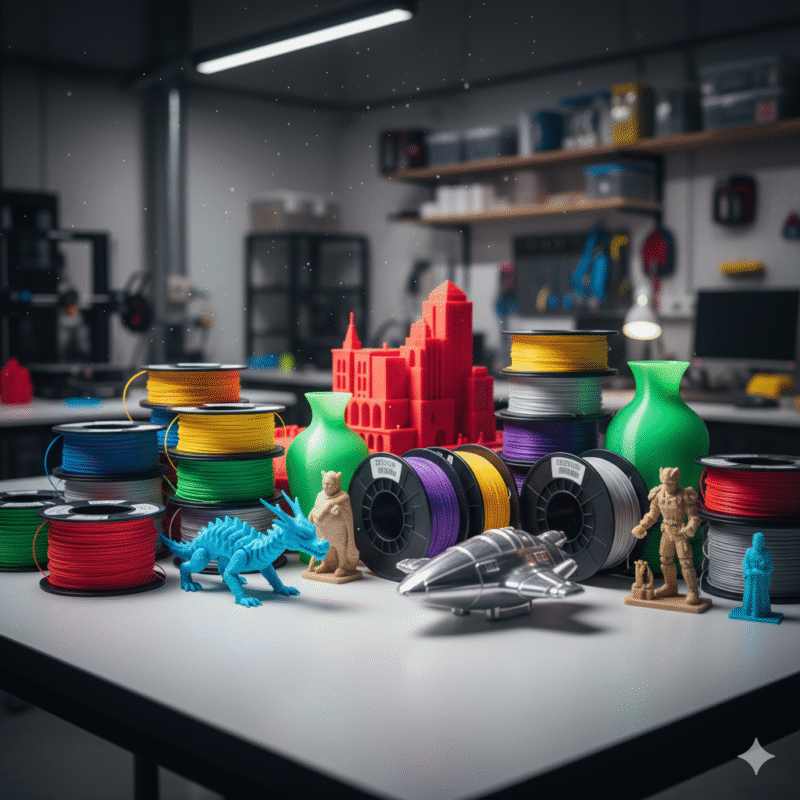
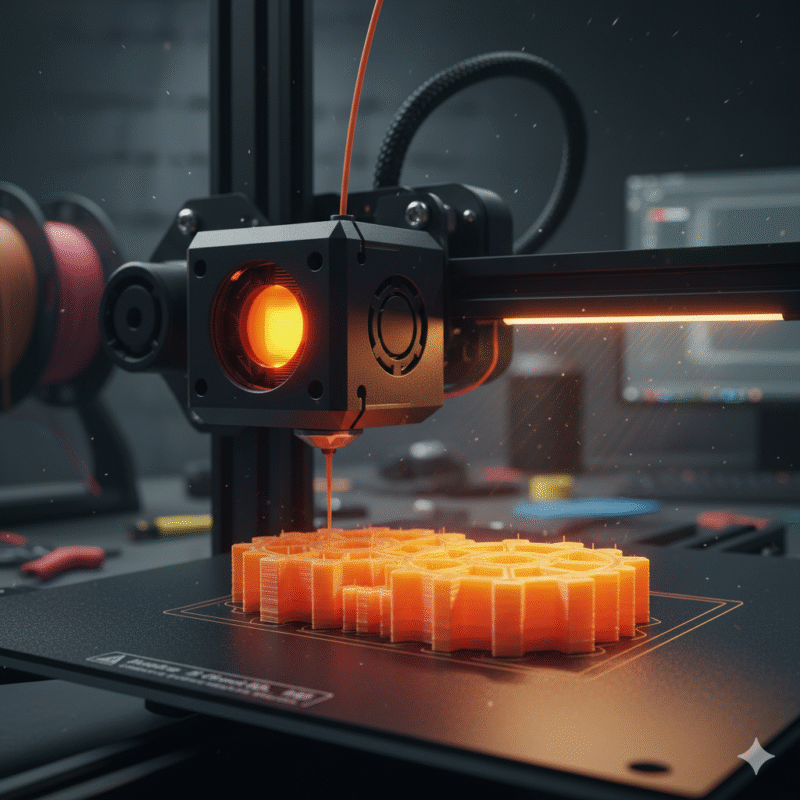
Printing: The 3D printer reads the G-code and begins building the model layer by layer, melting or hardening the chosen material (plastic filament, resin, metal powder, etc.). Each layer is meticulously placed on top of the previous one.

Common 3D Printer Technologies:

FDM (Fused Deposition Modeling): The most common desktop 3D printing technology. It melts and deposits thermoplastic filaments in layers. Ideal for home users and hobbyists.

SLA (Stereolithography): Uses Ultraviolet (UV) light to cure liquid resin. Offers much higher detail and smoother surfaces.

DLP (Digital Light Processing): Similar to SLA but uses a projection screen to cure the resin layer by layer, often resulting in faster print times.

SLS (Selective Laser Sintering): Uses a laser to sinter powdered material (nylon, metal, etc.). Produces durable and functional parts.

(Image Placeholder: A visually appealing image showing various types of 3D printers (FDM, SLA) in an active workshop environment.)

What is an STL File and Why is it Essential for 3D Printing?

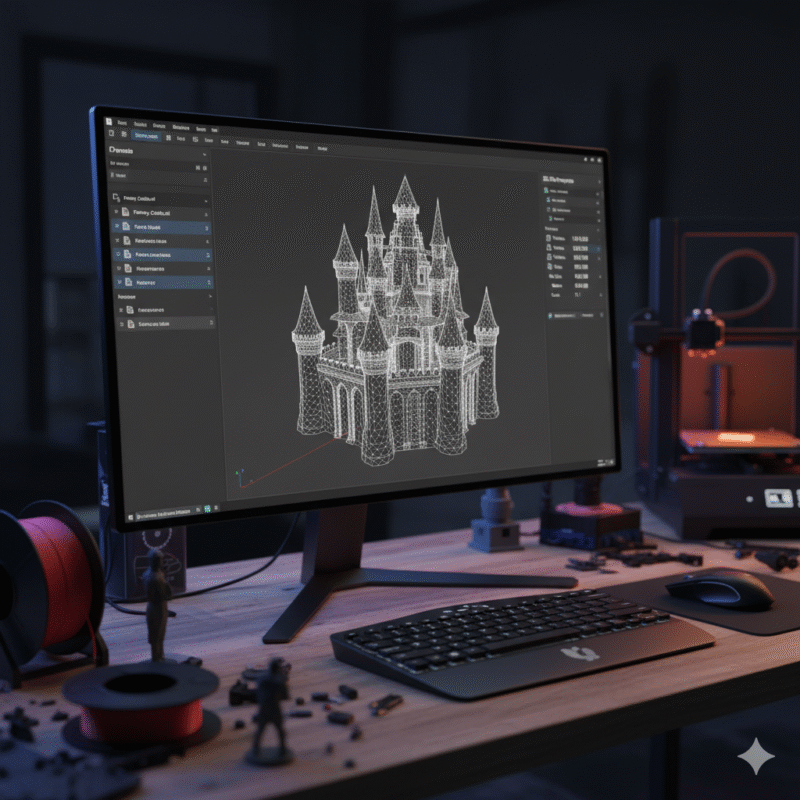
The STL (Standard Tessellation Language or StereoLithography) file is the cornerstone of the 3D printing world. An STL file describes the surface geometry of a 3D model as a collection of small triangles (tessellation). The smaller and denser these triangles are, the smoother and more detailed the surface of the model appears.

Why Are STL Files Used?

Universality: STL is a universal format supported by nearly all 3D modeling software and 3D printer slicers. This means you can easily share your designs across different platforms.

Simplicity: Because it only defines surface geometry, file sizes are generally manageable.

Compatibility with 3D Printing: Slicer software can easily interpret the triangular mesh structure in an STL file, dividing it into layers and converting it into G-code.

Creating and Using an STL File:

When you create a design in a 3D modeling program (e.g., Blender, Fusion 360, Tinkercad), you can save this model using the “Export as STL” option. You then upload the saved STL file to a slicer program (e.g., Cura, PrusaSlicer, Simplify3D) to prepare it for printing.

(Image Placeholder: A computer screen displaying a 3D model as a wireframe/mesh (showing triangles) with a 3D printer next to it, indicating the slicing process.)

Areas of Application:

Medicine: Prosthetics, surgical models, bioprinting (organs and tissue).

Automotive: Spare parts, custom interior designs, prototypes.

Aerospace: Lightweight and durable aircraft components.

Architecture: Scaled models of buildings and cities.

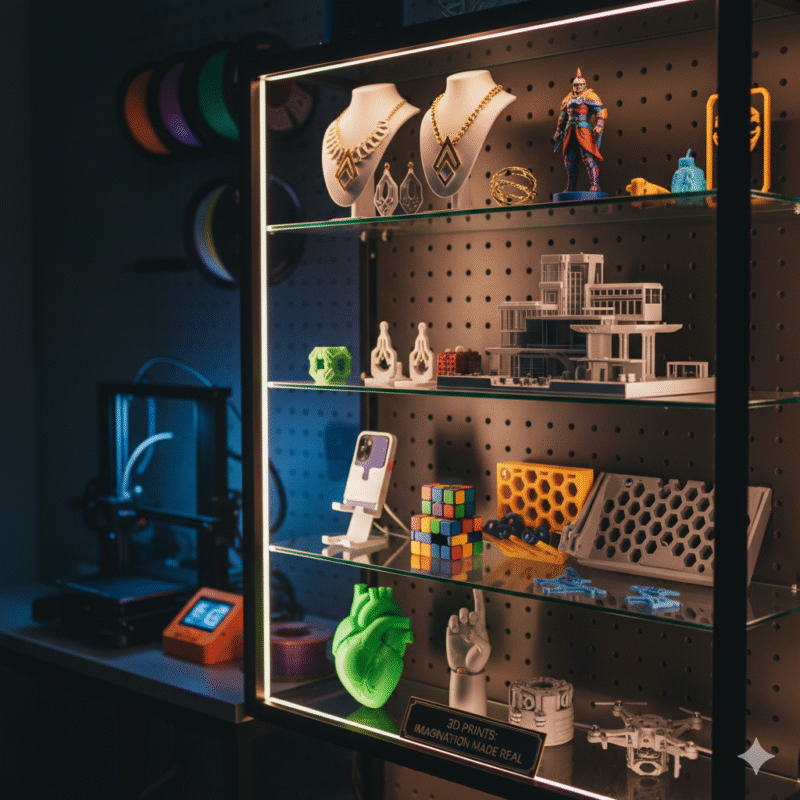
Art and Design: Sculptures, jewelry, costume accessories.

Hobby and Home Use: Toys, household items, figurines, personal projects.

The advantages and applications of 3D printing

3D printing offers unique benefits that are transforming many industries.

Prototyping: It enables the fast and cost-effective production of prototypes in the product development cycle.

Customisation: Creating products and designs tailored to individual needs and preferences.

Complex geometries: The ability to print intricate shapes and internal structures that are difficult or impossible to produce using traditional methods.

On-demand manufacturing: Reducing warehousing costs by only producing items when they are needed.

Education: Supporting STEM (Science, Technology, Engineering and Mathematics) education in schools and universities.

Unlock Your Creativity with STL Files!

3D printing is a fascinating technology that opens the door to realizing your imagination. Whether it’s a complex machine part, a cute figurine, or a practical organizer for your home, you can turn it into reality with the right STL file and a 3D printer.

Explore hundreds of high-quality, print-ready STL files on our site and start your own 3D printing journey today!